



Knight Online Mage Guide: Fire, Glacier and Lightning
Connect element, stats, staff, resistance, and party role in one build plan
A complete guide to Fire, Glacier, and Lightning Mage builds through damage, slow, control, MP, INT, HP, staff choices, positioning, and party fit.
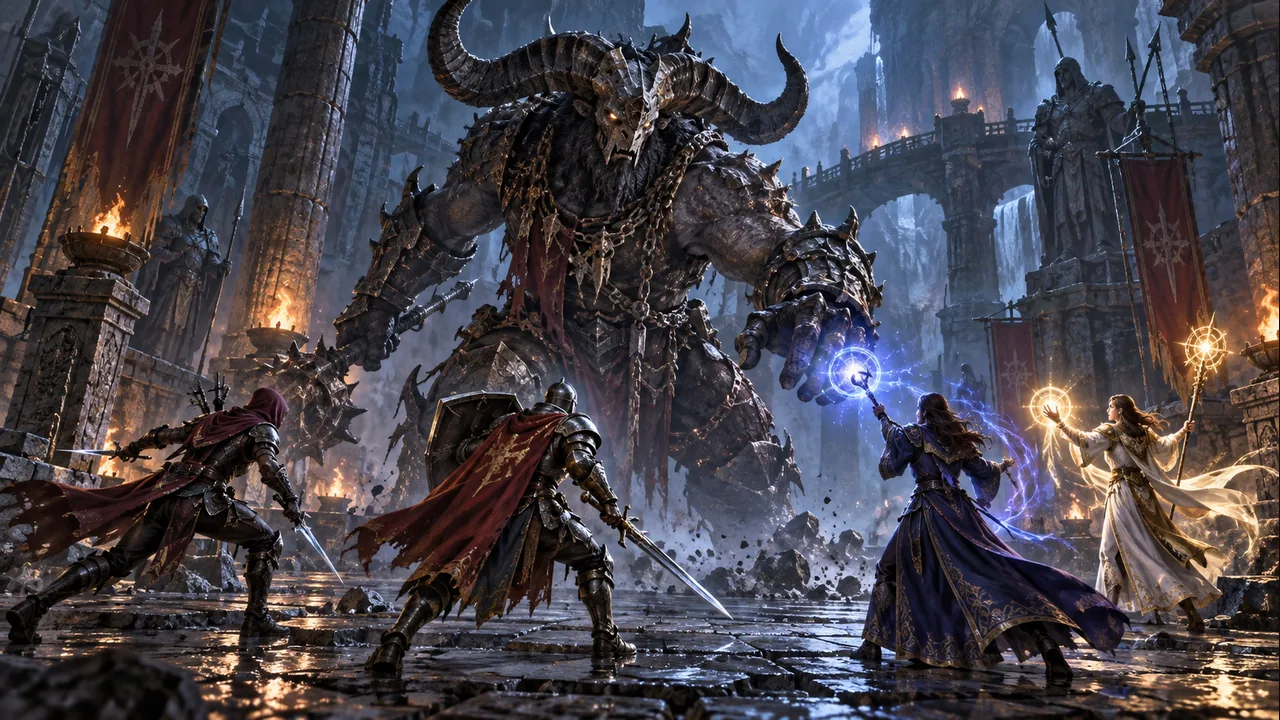
Each element has a different job
Mage selection is more than asking which color deals the largest number. The official class description presents fire as destructive power, glacier as slowing, and lightning as short disruption; value comes from applying the right function at the right time.
- Check 1: When testing Fire, measure whether the cast can be completed safely as well as its raw damage.
- Check 2: Judge Glacier by how much it alters enemy position and escape plans, not damage alone.
- Check 3: For Lightning, observe whether the party can use the brief control window it creates.
- Check 4: Do not treat the first element choice as destiny; write down the needs of your main content and regular team.
Watch out: Element outcomes can depend on resistance, target, and current balance. Do not publish community percentage tables as facts without an official statement or a controlled, current test.
Balancing INT, MP, and HP
Intelligence relates to Mage equipment and mana, Magic Power to pure magic damage, and Health increases maximum HP for every class. Start from the armor and staff requirements, then account for the survival needed to complete casts.
- Check 1: Record the INT and MP requirements of the intended armor and staff from live item tooltips.
- Check 2: Test extra MP through both spell results and mana sustainability against the same target.
- Check 3: Compare the damage opportunity of a paper build with its lower defense and HP risk.
- Check 4: Calculate potion consumption and escape options separately for sessions without reliable party support.
Watch out: Another Mage’s stat screen may depend on different armor, staff, or buffs. Copying numbers without understanding requirements can create unusable gear or an unnecessarily fragile character.
Area spells and positioning
Mage area damage and control become valuable when placed on the correct ground at the correct moment. Maximum theoretical damage changes little if line of sight is broken or the spell lands away from the party’s pressure.
- Check 1: Learn range and area size against a safe monster group with a consistent camera angle.
- Check 2: Place an area to close an escape route in response to the party call, not randomly before it.
- Check 3: Identify both the enemy approach corridor and your own retreat path before committing to a cast.
- Check 4: Adjust effects and camera distance when visual clutter prevents reliable target recognition.
Watch out: Standing far back can look safe while separating you from Priest range or the group’s retreat. Good Mage position preserves both casting distance and support distance.
Staff, armor, and resistance
A Mage item should be read through staff element, upgrade level, armor requirements, and defensive contribution together. Maximizing one bonus may leave a major weakness against the damage or control encountered most often.
- Check 1: Verify that the staff matches the primary element and the wording of the skills you use.
- Check 2: Compare gained defense with lost MP, HP, or flexibility whenever armor changes.
- Check 3: Test resistance gradually against the elements that appear repeatedly in death reviews.
- Check 4: Fix elemental or stat mismatches before assuming an expensive upgrade is the solution.
Watch out: “Best staff” is not meaningful without budget, element, and content. Compare items on the same build and against the same test target.
Party coordination and useful metrics
Mage party value comes from synchronized areas, target information, control chains, and safe resets. A personal damage display cannot by itself show where the team held the enemy or how many allies escaped.
- Check 1: Agree on the call that triggers area spells before combat begins.
- Check 2: Measure how quickly the party reaches targets after Glacier or Lightning effects.
- Check 3: Track mana failure, interrupted casts, and deaths separately to find the real bottleneck.
- Check 4: Compare elements across several attempts against similar opponents with the same party structure.
Watch out: One crowded battle cannot prove an elemental choice. Latency, resistance, and composition change the outcome, so use several comparable sessions.
Game references used to distinguish Mage elements
The Fire, Glacier, and Lightning paths are grounded in the Mage identity described on the official character page, then connected to elemental, stat, and skill mechanics through NTTGame’s gameplay guide. Reading the sources this way separates area pressure, slowing, control, and party fit from raw damage alone.
Element roles were checked at a general mechanics level on September 24, 2026. Resistance calculations, individual skill behavior, and the current PvP balance can move with a patch; read the live tooltip and run a one-variable test on the same target before investing instead of copying an old video number.
The article does not publish a universal damage ladder for Fire, Glacier, and Lightning. Altered coefficients, extra elements, or custom resistance formulas found on a private server are not official evidence; the recommendation is framed around role, regular party composition, and sustainable cost.
FAQ
Is Fire Mage better than Glacier Mage? +
Fire leans toward damage, while Glacier emphasizes slowing and area management. The stronger option depends on party composition, enemy resistance, equipment, and activity. Measure control outcomes together with damage under comparable conditions.
Should a Mage prioritize MP or HP? +
Meet the INT and MP requirements of the intended staff and armor first. The next choice depends on whether damage or survival is the limiting factor. Adding MP does not solve repeated deaths that happen before a cast completes.
Does Lightning control always work? +
Control can depend on the target, resistance, and current mechanics, so it should not be treated as guaranteed. Evaluate Lightning by whether the party uses the resulting window, not only by its damage number.