



Knight Online Warrior Guide 2026: Stats, Skills and Gear
Balance pressure, durability, and party responsibility on the frontline
A complete Warrior framework for STR and HP planning, skill trees, weapon and armor priorities, party responsibilities, and measurable PvE or PvP practice.
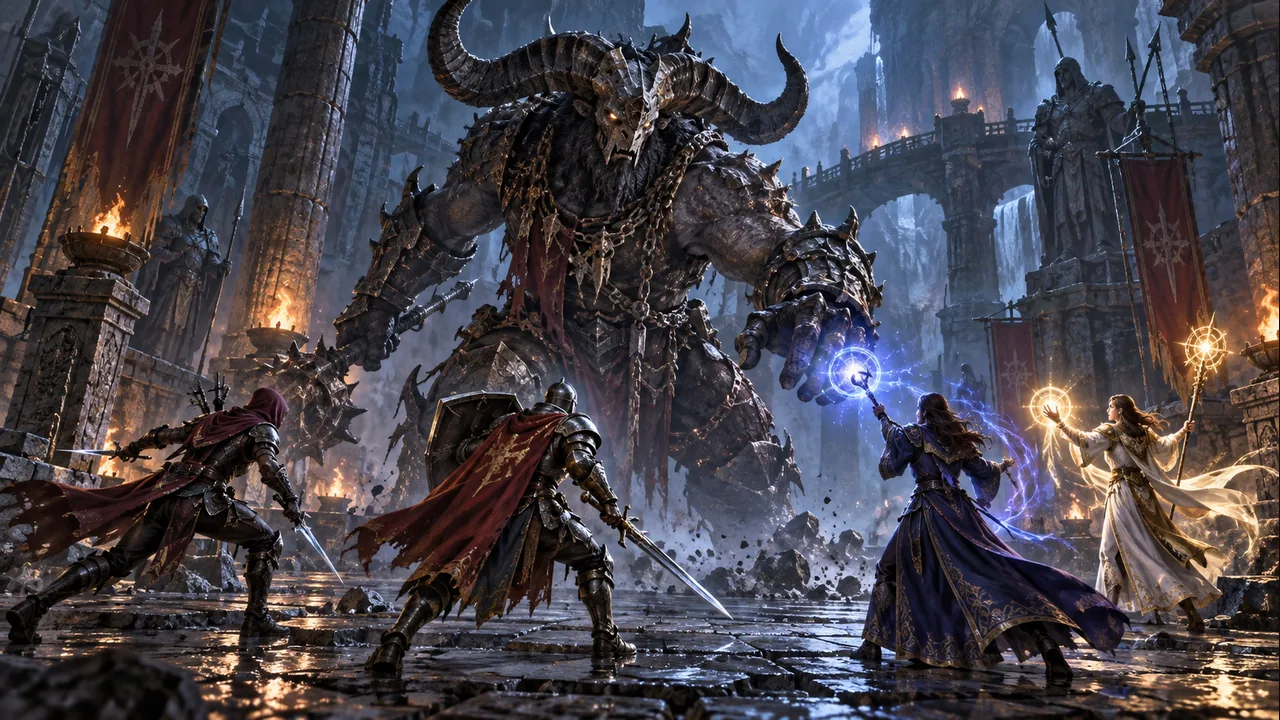
The Warrior’s real job
A Warrior is not simply a melee character that produces a large attack number. Frontline presence, target access, sustained party pressure, and timely defensive responsibility determine the class’s total value.
- Check 1: During solo hunting, evaluate potion and repair cost together with kill speed.
- Check 2: In a party, follow the called target because damage split across several enemies weakens coordinated pressure.
- Check 3: Hold the frontline without leaving your Priest’s effective range in narrow or crowded areas.
- Check 4: Prepare a defensive response by reading the enemy’s focus change instead of waiting for critical health.
Watch out: A high AP value creates little value when you cannot reach a target or repeatedly leave support range. Read Warrior performance through survival, contact time, and group coordination together.
Planning STR and HP
The official guide describes Strength as important to melee attack and carrying capacity, while Health increases maximum HP. Allocation should begin with the requirements of intended equipment rather than a number copied from the internet.
- Check 1: Write down the STR requirement of the target weapon and armor and explain why each threshold matters.
- Check 2: Measure the value of remaining points in HP against the same monster or combat scenario.
- Check 3: Check how carrying capacity affects potion and quest-item load before a long session.
- Check 4: Recalculate requirements when equipment changes instead of assuming the old stat plan still fits.
Watch out: A restat option does not make repeated mistakes free or unlimited. Verify every requirement against the current in-game item tooltip before committing points.
Building the skill tree around a goal
Skill points begin after level 10, and tree choices determine how Warrior distributes attack, defense, and supporting functions. Attempting to unlock everything can delay the thresholds that make the primary role work.
- Check 1: Identify the attack sequence used most often in your main content and plan its required thresholds first.
- Check 2: Value defensive and movement tools by the extra target uptime they create, not only by apparent damage loss.
- Check 3: Arrange basic attack, core skills, defense, and potions so cooldowns do not create an awkward bar sequence.
- Check 4: Test a new skill’s range, mana cost, and animation on a safe target before using it in a war.
Watch out: An old build screenshot may not suit a new patch or a different level. Read the current client description and plan only around thresholds your character can actually unlock.
Weapon, armor, and accessory priority
Warrior equipment cannot be reduced to one AP number. Weapon type, defense, HP, resistance, and stat requirements carry different weight in each activity, so begin by identifying the failure that occurs most often.
- Check 1: Test a weapon improvement when pressure is weak after contact, or defense and HP when deaths happen too early.
- Check 2: Compare accessories by HP, defense, and relevant resistance as well as attack bonuses.
- Check 3: Compare the expected risk of upgrading with the direct purchase cost instead of counting only a successful result.
- Check 4: Use item descriptions to track how defense against different weapon types may affect PvP outcomes.
Watch out: One expensive piece does not automatically repair a whole build. Without identifying the weakest link, it may enlarge the character sheet while leaving the actual cause of death unchanged.
Combat routine and measurement
Reliable Warrior play converts targeting, approach, pressure, resource control, and safe disengagement into a repeatable sequence. Measuring that sequence gives better feedback than looking only at kill count.
- Check 1: Observe time to first contact and how long you remain connected to the chosen target.
- Check 2: Record mana and potion consumption to determine whether the damage sequence is sustainable.
- Check 3: Use one clear voice or text cue to reduce delay when the party changes its focus target.
- Check 4: After dying, review position, support range, and defensive timing rather than only the final hit.
Watch out: One unusually good or bad duel is not proof of a build. Repeat comparable encounters and change only one equipment or skill-bar variable at a time.
Official pages used to test Warrior decisions
The Warrior’s melee and durability identity comes from the official character page; NTTGame’s gameplay guide supports the links among stats, skills, equipment requirements, and upgrading. These sources are used to diagnose the player’s own damage-versus-survival bottleneck, not to prescribe a copied equipment set.
The mechanics were reviewed on September 24, 2026. If a weapon requirement, skill description, or defense value changes after an update, the live character window and current item tooltip take precedence; read the exact requirement again before committing stat points for a planned purchase.
This guide does not claim one permanent best Warrior build, quote an unverified damage percentage, or assume an expensive item creates skill by itself. Equipment invented for a private server is not presented as an official option; recommendations are judged by role, resource cost, and measured combat outcomes.
FAQ
Should a Warrior put every stat point into STR? +
No. STR matters for attack and equipment requirements, but HP directly affects durability. Meet the intended weapon and armor thresholds, then evaluate the remaining allocation against the survival demands of your actual content.
Should a Warrior buy a weapon or armor first? +
Follow the cause of failure. Upgrade the weapon when contact produces too little pressure; prioritize armor, HP, and resistance when you die before support can stabilize you. Measure both choices in the same type of activity.
Can one Warrior build cover both PvE and PvP? +
The core may overlap, but target priority, resistance, skill-bar layout, and consumables differ. PvE values sustainable kills and operating cost, while PvP places more weight on target access, burst windows, coordination, and survival.